ATS Restoration Team Old Bridge Butler
📞 862-421-8937
24/7 Emergency Response

Fire Damage Restoration in Butler.

Kitchen flare-ups through full structure fires — restoration scope built around what is salvageable vs what insurance will replace.

Local team in Butler Honest, transparent pricing 24/7 emergency line
Local Based in Butler, NJ
IICRC S500 + S520 + S700 protocols
Insurance Direct billing to all major carriers
Service Overview

How We Approach It

The "house seems fine, just smells smoky" calls are deceptive. Soot has migrated through the whole HVAC system, settled in attic insulation, and contaminated content far from the fire origin. We scope the full structure, not just the visibly damaged room.

What's Included

  • Soot + smoke odor removal
  • HVAC decontamination
  • Pack-out + content cleaning
  • Hydroxyl odor treatment
  • Structural rebuild
  • Insurance-scope documentation

Content Pack-out: When to Move Your Stuff Out

For significant fires, content pack-out is the standard approach. We catalog and box everything in the affected area, transport it to our cleaning facility, sort by material type (washables / dry-clean / electronics / hard surfaces / unsalvageable), clean each appropriately, and store cleaned items in a climate-controlled environment until the property is ready for re-occupancy.

Pack-out has two big benefits beyond the cleaning itself. First: it gets your possessions out of the affected environment so they stop absorbing additional smoke odor while reconstruction runs. Second: every item is documented with a photo + condition note + cleaning result, which becomes the basis for the contents portion of the insurance claim. Items we determine are unsalvageable get documented as such, and the documentation is what supports the claim valuation.

For smaller losses where pack-out is not needed, we clean in place — same standards, same documentation, just performed at the property. Our crew brings cleaning supplies + HEPA equipment + transport bins for items that need shop work.

Hvac Decontamination — the Step Most Restorers Skip

If smoke entered the HVAC system, the system needs to be cleaned per NADCA (National Air Duct Cleaners Association) standards before re-occupancy. Soot inside ductwork acts as an odor reservoir — every time the HVAC runs, it pushes that residue back into the living space. Owners report "the smoke smell came back" weeks after restoration. The reason is almost always that the ducts were not properly cleaned.

Our HVAC scope: source removal (HEPA vacuuming of supply + return ducts), antimicrobial treatment, replacement of any porous duct insulation that was contaminated, and replacement of the air handler filter + any disposable components. We document with before/after photos at multiple inspection points so the carrier sees the work was actually completed and not just billed.

For homes with old ductwork that was already in marginal condition before the fire, we will tell you honestly when replacement makes more sense than cleaning. The decision drives a different scope, different timeline, different insurance discussion — better to know on day one than discover after a partial cleaning that the system needs replacement anyway.

Process

Our Process

  1. 01

    Phone Triage

    Real human dispatch from Butler. We sort loss type on the first call so the truck arrives equipped for what we are walking into.

  2. 02

    On-site Assessment

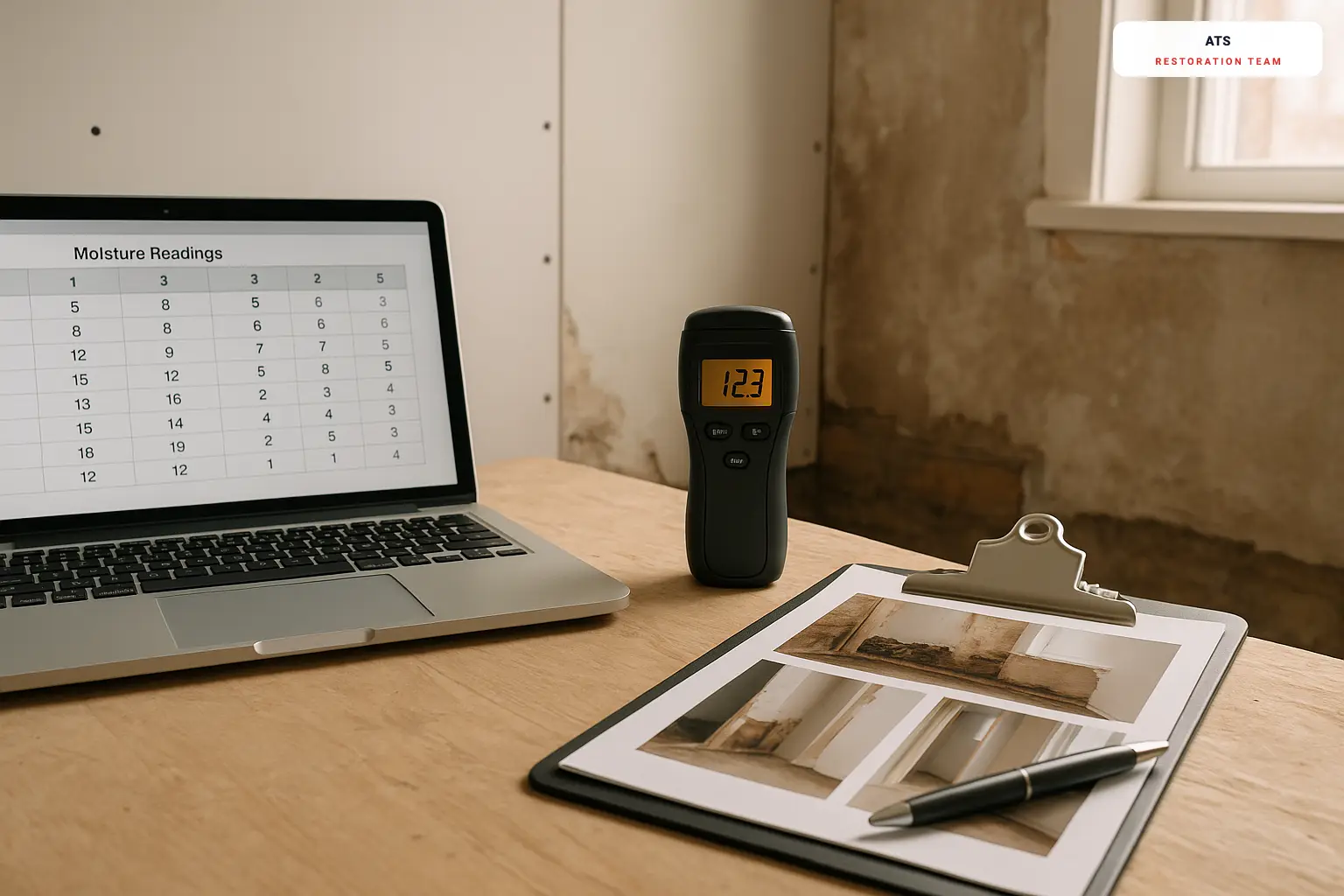
    Photos of every wet surface, moisture readings of every substrate, written cause-of-loss narrative, confirmation the source is fully off.

  3. 03

    Containment + Extraction

    Standing water removed first. Affected areas isolated to prevent spread. Damaged porous material cut to documented flood line and bagged for disposal.

  4. 04

    Documented Drying

    Industrial drying equipment sized for the loss volume. Daily moisture readings logged on a building diagram. Equipment runtime tracked for the insurance claim.

  5. 05

    Reconstruction + Walkthrough

    Drywall, flooring, paint, trim — all matched to pre-loss condition. Final walkthrough confirms the work is done before the project closes.

24/7 Emergency

Sewer backup, fire aftermath, storm damage — our Butler truck is moving.

We dispatch a tech 24/7 across the Butler metro. Average on-site time is under an hour.

Call 862-421-8937
The difference

Why Customers Choose Us

Real reasons. No invented stats, no manufactured awards.

  • 01

    Real Butler Dispatch

    Phone answered by a human in NJ 24/7. No automated phone tree, no offshore call-center, no callback after the loss has gotten worse. Truck rolls while you are still on the call.

  • 02

    Insurance Documentation Discipline

    Photos, moisture readings on a building diagram, Xactimate scope at carrier-standard pricing, equipment runtime logs. The full record goes to the adjuster so the claim closes without back-and-forth.

  • 03

    Single-Source Contracting

    Same crew handles mitigation AND reconstruction. No handoff to a separate general contractor mid-job. One contract, one phone number, one team accountable from first call to final walkthrough.

Service Area

Serving Morris County

Our Butler dispatch covers a tight radius across Morris County. The compact service area is intentional — restoration work scales with response time, and minutes save material. Bloomingdale, Riverdale, and Kinnelon all reach inside 30 minutes during normal traffic.

Counties Covered

  • Morris County, NJ

Cities We Service

Each Morris city below opens a local page with arrival times from our Butler base and the loss patterns we handle most often in that municipality.

Not sure if you're in our area? Call 862-421-8937 and we'll tell you in 30 seconds.
FAQ

Frequently Asked Questions

If you don't see your question, just call or message us.

Do you handle commercial restoration? +

Yes, we handle small to mid-size commercial restoration in Morris County — offices, retail, medical, light industrial. Commercial work has different operational tempo than residential (tenant operations come first, after-hours noise scheduling, larger COI requirements). We have separate residential and commercial tech rotations because the workflows differ.

Are your prices in line with what insurance pays? +

Yes — our scopes are written in Xactimate at carrier-standard pricing for the NJ market. We do not inflate scope to chase coverage and we do not cut corners to under-bid. The price reflects the work IICRC standards require for the loss type. Adjusters see our scopes regularly and approve them without back-and-forth because the line items match the documented conditions.

How do you handle pets and kids during the work? +

For most water restoration work, pets and kids stay in unaffected areas of the home and life continues. We coordinate access timing so equipment doesn't prevent normal household routines. For Cat-3 sewage cleanup, the affected area is evacuated during the cleanup phase (typically 5-7 days) — we discuss temporary arrangements at our first on-site visit.

What happens to my contents during restoration? +

For minor losses, we move content within the home to dry/safe areas and clean as needed. For significant losses, we offer pack-out service — your contents are catalogued, transported to our cleaning facility, sorted by material type, cleaned appropriately, and stored climate-controlled until the property is ready for re-occupancy. Pack-out keeps possessions out of the affected environment so they stop absorbing additional damage.

How fast can you respond to an emergency in Butler? +

For active emergencies in Butler, our standard target is on-site within the hour during normal traffic conditions. We dispatch 24/7 — a real human answers the phone, gets the address and loss type, and a truck rolls while we are still on the call with you.

Do you work directly with my insurance company? +

Yes, with your authorization. We work with NJM, State Farm, Allstate, Liberty Mutual, Travelers, Progressive, and most other carriers serving NJ. Get the claim number from your carrier first if you can; with that we can talk to your adjuster directly and bill the carrier rather than you.

How long does drying take after a water loss? +

Three to five days for a typical residential water loss. Hardwood floors and dense materials can take longer — sometimes 7-10 days. We monitor with calibrated moisture meters daily and only stop drying when readings return to dry-standard moisture content for the materials in your home.

Call Now • Butler

Need Restoration in Butler? One Call Gets a Crew Moving.

One phone call gets a truck rolling. Real Butler team, real local response time, no automated phone tree. We'll be on site fast.

📞 Tap To Call 862-421-8937

24/7 Emergency Dispatch

📞 Call 862-421-8937